

Alternative to Caffeine for Energy: Your 2026 Guide
Most advice about finding an alternative to caffeine for energy starts with the wrong question: “Which drink or supplement can replace coffee?” That approach assumes energy is a single output controlled by one ingredient. For high-output professionals, shift workers, and anyone managing long workdays, the core problem is more specific. They may need morning activation, sustained attention, fatigue resistance, or a reliable way to wind down without damaging sleep.
A caffeine-free product can preserve a ritual without improving alertness. An adaptogen may reduce the feeling of fatigue without creating a strong stimulant effect. A nootropic may support focus without solving poor sleep or inadequate food intake. The useful strategy is therefore a full-day energy protocol, matched to the job at hand rather than built around a single replacement.
Table of Contents
- Why a Simple Caffeine Swap Is Not the Answer
- The Three Pillars of Sustainable Energy
- A Modern Toolkit of Caffeine Alternatives
- Comparing Options Onset Time and Use Case
- Building Your Personal Energy Protocol
- Why Modern Delivery Formats Matter
Why a Simple Caffeine Swap Is Not the Answer
Replacing coffee with chicory, herbal tea, or a supplement sounds efficient, but it often leaves the underlying problem untouched. Many caffeine-free alternatives are marketed as energizing even though the evidence for true energy effects is limited. As GoodRx's guidance on staying awake without caffeine makes clear, a person needs to separate subjective energy, fatigue reduction, and objective performance.
Those outcomes aren't interchangeable. A warm drink may improve mood because it preserves a familiar morning routine. A snack may make someone feel better because hunger was driving the slump. An adaptogen may help a person tolerate stress-related fatigue, while a stimulant-like compound may support alertness and attention more directly. Each can be useful, but none should automatically be treated as a one-to-one substitute for caffeine.
Three different problems often get called “low energy”
Stimulation increases arousal or alertness. It can be useful before a demanding task, but too much stimulation may produce restlessness or interfere with a later wind-down.
Fatigue reduction changes how taxing a task feels. This matters during long shifts, repetitive work, endurance training, and stressful operating conditions. It doesn't necessarily create a sharp morning lift.
Cognitive performance concerns attention, working memory, decision-making, and the ability to maintain mental output. Someone can feel subjectively energetic while still struggling to concentrate, just as someone can feel tired while performing adequately under pressure.
That distinction changes the selection process. A nurse nearing the middle of a long shift may need steady focus and food timing, not a stronger stimulant. A founder facing an early strategy session may need light, hydration, movement, and activation. A night-shift worker approaching the end of duty may need an off-ramp that protects sleep rather than another energizing ingredient.
Practical rule: Choose the tool according to the failure mode. Don't use a stimulant to compensate for hunger, a coffee substitute to solve sleep debt, or a relaxation formula when the real need is immediate alertness.
A broader approach to managing tiredness can be found in proven fatigue solutions for pros, particularly for professionals whose work demands sustained output. The central lesson is simple: the most effective alternative to caffeine for energy is usually a sequence of interventions, not a single product.
The Three Pillars of Sustainable Energy
Supplements work better when the basic inputs are stable. Sleep timing, food composition, and movement determine whether a person has a usable baseline or is trying to patch a depleted system with increasingly complex products.

Sleep timing comes before stimulation
“Get more sleep” is too vague for a shift-based professional. The practical target is a repeatable sleep window that fits the work schedule as closely as possible. Consistent wake timing, a dark and cool sleep environment, and a deliberate reduction in bright light before bed give the nervous system clearer timing signals.
Night workers need a different setup from office workers. A darkened room after a night shift, a predictable post-work routine, and protection from unnecessary interruptions can make daytime sleep more reliable. A person who keeps adding stimulants while allowing sleep timing to drift is treating the symptom while preserving the cause.
Morning activation should also use environmental inputs before supplements. Exposure to bright outdoor light, water after waking, and a short bout of movement can help the body transition into work mode without immediately escalating stimulation. Practical guidance on this sequence appears in this morning energy routine.
Food timing prevents avoidable crashes
A long workday becomes harder when the first meal is mostly refined carbohydrate or when meals are postponed until hunger becomes urgent. Protein paired with carbohydrate and fiber gives the body a more stable supply of fuel than a sweet drink or snack alone.
The exact meal depends on the person, schedule, and workload. A practical pattern might include a protein-rich breakfast before an early shift, a prepared meal during the main break, and a portable snack for the period when concentration usually drops. Greek yogurt with fruit, eggs with whole-grain toast, or a bean and grain bowl are more useful examples than a vague instruction to “eat healthy.”
Hydration also deserves a place in the protocol. A worker who has spent hours moving between calls, rooms, vehicles, or meetings may interpret thirst and heat as a need for stronger stimulation. Water and a proper meal won't feel as dramatic as coffee, but they address common causes of low output without creating a later recovery problem.
Movement is an alertness input
Movement doesn't need to mean a full workout. A brisk walk, a few flights of stairs, bodyweight squats, or mobility work can interrupt prolonged sitting and raise alertness before a difficult task. For a shift worker, short movement breaks may fit between duties more realistically than a scheduled training session.
The most useful timing is often before the predictable slump, not after attention has already collapsed. A brief walk before a demanding meeting, a few minutes of movement before charting, or light mobility before the final work block can provide a clean transition between tasks.
These pillars also help identify when a supplement is unnecessary. If energy improves after food, water, light, and movement, the correct intervention wasn't a stronger stimulant. It was better sequencing.
A Modern Toolkit of Caffeine Alternatives
The supplement aisle becomes easier to understand when ingredients are grouped by mechanism. The relevant question isn't whether a compound is “natural.” It's whether the compound is intended to stimulate, reduce fatigue, support attention, or preserve a useful ritual.
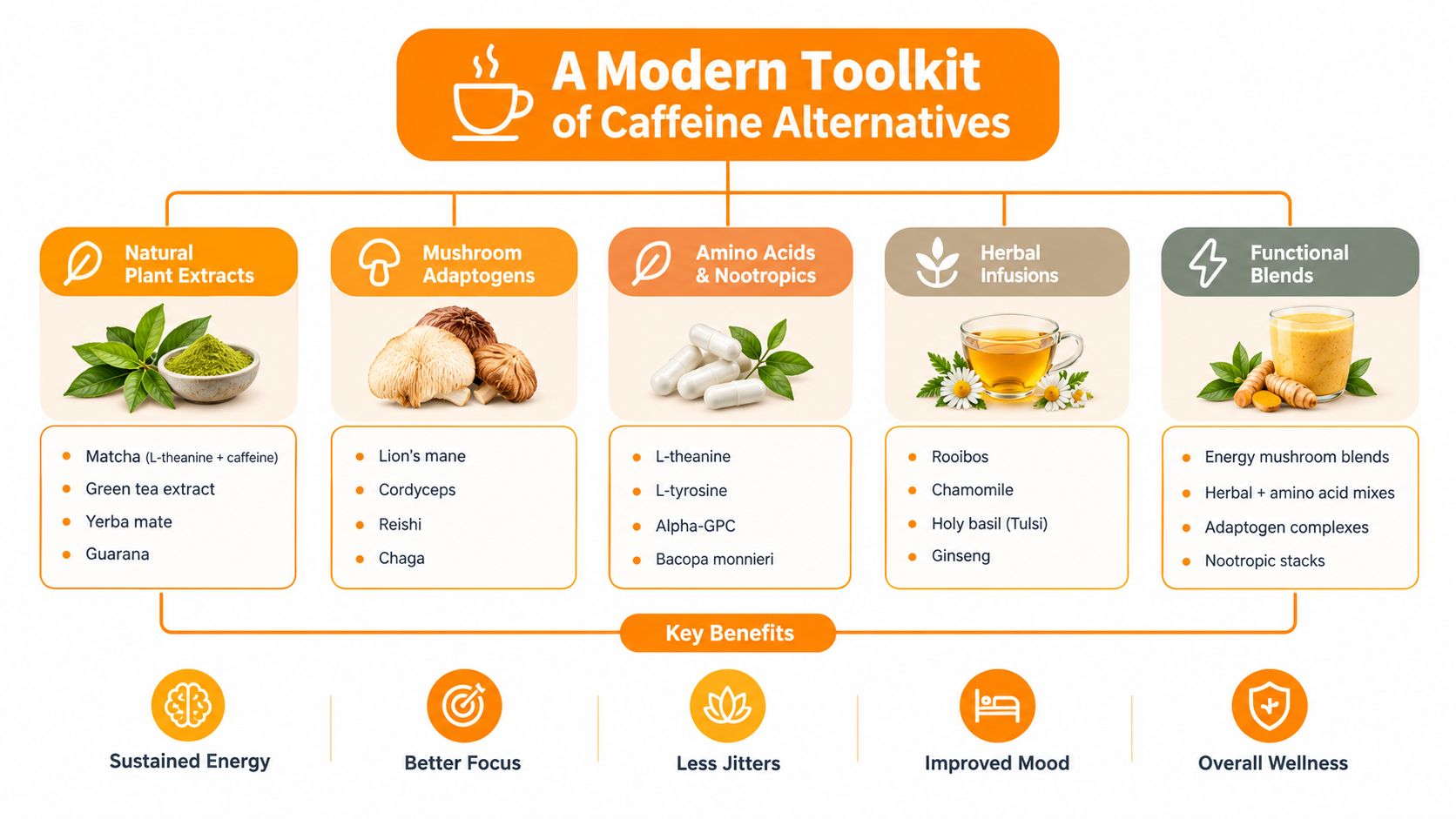
Adaptogens for stress-related fatigue
Rhodiola rosea belongs in the fatigue-resilience category rather than the direct-stimulation category. A systematic review cited by this Rhodiola research overview evaluated 36 studies and reported consistent anti-fatigue effects across physical and mental fatigue contexts. Another review described the evidence as contradictory and methodologically limited, so Rhodiola shouldn't be presented as a guaranteed energy booster.
Its more defensible use case is a person dealing with stress-associated fatigue, demanding endurance work, or prolonged cognitive load. The expected experience is usually subtler than a strong stimulant. It may support the ability to continue working without making the person feel sharply activated.
That distinction matters for safety and expectations. Someone seeking an immediate lift before a presentation may be disappointed by Rhodiola. Someone trying to make a long, stressful block feel less draining may find the category more relevant. Product quality, extract standardization, individual response, and medication interactions also deserve attention, particularly for people with medical conditions.
Cognitive support for calm focus
Amino acids and choline-related compounds are often positioned as focus tools rather than energy generators. L-theanine is commonly used in calm-focus formulations, while Alpha-GPC is included in some nootropic stacks intended to support cognitive function. The evidence and experience vary by person, and these ingredients shouldn't be assumed to produce the same acute alertness as caffeine.
This category fits tasks where agitation is the problem. A developer who can stay awake but keeps switching tabs, an analyst who feels mentally scattered, or a creator who needs a longer uninterrupted work block may be looking for smoother concentration rather than a stronger jolt.
The trade-off is immediacy. These compounds may feel understated, and a person expecting a noticeable surge can mistake a lower-arousal effect for ineffectiveness. A useful evaluation asks whether the person completes work with fewer interruptions, maintains attention longer, or feels less mentally strained. It shouldn't rely only on the sensation of being “energized.”
For readers comparing ingredient families, this guide to non-caffeine stimulants provides additional context on how different mechanisms fit different performance needs.
Smoother stimulant-like options
Theacrine is a caffeine-like purine alkaloid studied as a smoother stimulant alternative. It appears to have an onset of about two hours, a longer half-life, and lower habituation than caffeine, according to the tactical-population study on caffeine and theacrine. The delayed onset makes timing essential. It isn't a sensible tool for a person who needs immediate activation in the next few minutes.
In that study, both 300 mg caffeine and a combination of 150 mg caffeine plus 150 mg theacrine significantly improved cognitive performance before and after physically fatiguing exercise. The result suggests that theacrine may be more useful as a sustained-focus adjunct than as a pure replacement for acute stimulation.
The trade-off is that “smoother” doesn't mean “free of stimulant considerations.” A longer action window can be helpful during an extended shift, but it can also be inconvenient if taken too late. The person using it should account for the delayed onset, the longer half-life, total stimulant exposure, and the possibility that the product still contains caffeine.
Ritual replacements aren't performance agents
Chicory can reproduce the roasted, bitter profile of coffee without functioning as an equivalent energy source. Someone who mainly misses the mug, aroma, or pause may find a product such as ChicoryCup coffee alternative powder useful as a ritual replacement.
That doesn't make it an alertness intervention. Harvard Health's point, reflected in the evidence brief, is that chicory-like substitutes don't provide the same energy boost as coffee. The practical role is behavioral consistency, not a guaranteed change in wakefulness or objective performance.
Comparing Options Onset Time and Use Case
The best choice depends on how soon the task begins and what kind of support the person needs. A power nap, a meal, Rhodiola, and theacrine solve different problems, so ranking them from “strongest” to “weakest” creates a misleading comparison.
| Alternative | Mechanism | Onset Time | Best For |
|---|---|---|---|
| Power nap | Reduces sleep pressure through brief rest | Depends on the rest period and individual sleep state | Acute tiredness when a safe rest opportunity exists |
| Protein-rich snack | Supplies fuel and reduces hunger-related fatigue | Often noticeable after eating and digestion begins | A slump linked to missed meals or insufficient food |
| Rhodiola rosea | Stress-fatigue modulation rather than direct stimulation | Variable and not reliably acute | Stress-related fatigue and prolonged physical or mental demand |
| Theacrine | Caffeine-like stimulation with a delayed profile | About two hours, according to the clinical study | Planned sustained focus across a long work block |
The table shows why context beats ingredient hype. A person who is falling asleep after inadequate rest shouldn't expect a snack or adaptogen to perform the same function as sleep. A person who skipped lunch shouldn't reach first for a compound intended to extend focus. The intervention should match the bottleneck.
A practical selection sequence
For an immediate slump, check the basics first. Water, a protein-containing snack, bright light, and brief movement may be more appropriate than a delayed-onset supplement.
For a planned long block, timing becomes more important. Theacrine's onset of about two hours makes it a scheduling tool, not an emergency rescue. Rhodiola may fit a fatigue-management strategy, but the evidence doesn't support treating it as a guaranteed energizer.
For a meeting or deep-work session, reduce friction. A quiet workspace, a clear task definition, and a calm-focus option may outperform a stronger stimulant that increases distraction.
Caffeine's persistence is also part of the decision. Professionals who are trying to protect sleep should consult expert advice from The Sleep Consultant and consider the timing of every stimulant-like product, including products marketed as gentler alternatives.
Building Your Personal Energy Protocol
A practical protocol begins with the workday rather than the ingredient label. The schedule should identify when activation is needed, when sustained focus matters, and when the body must begin transitioning toward recovery.
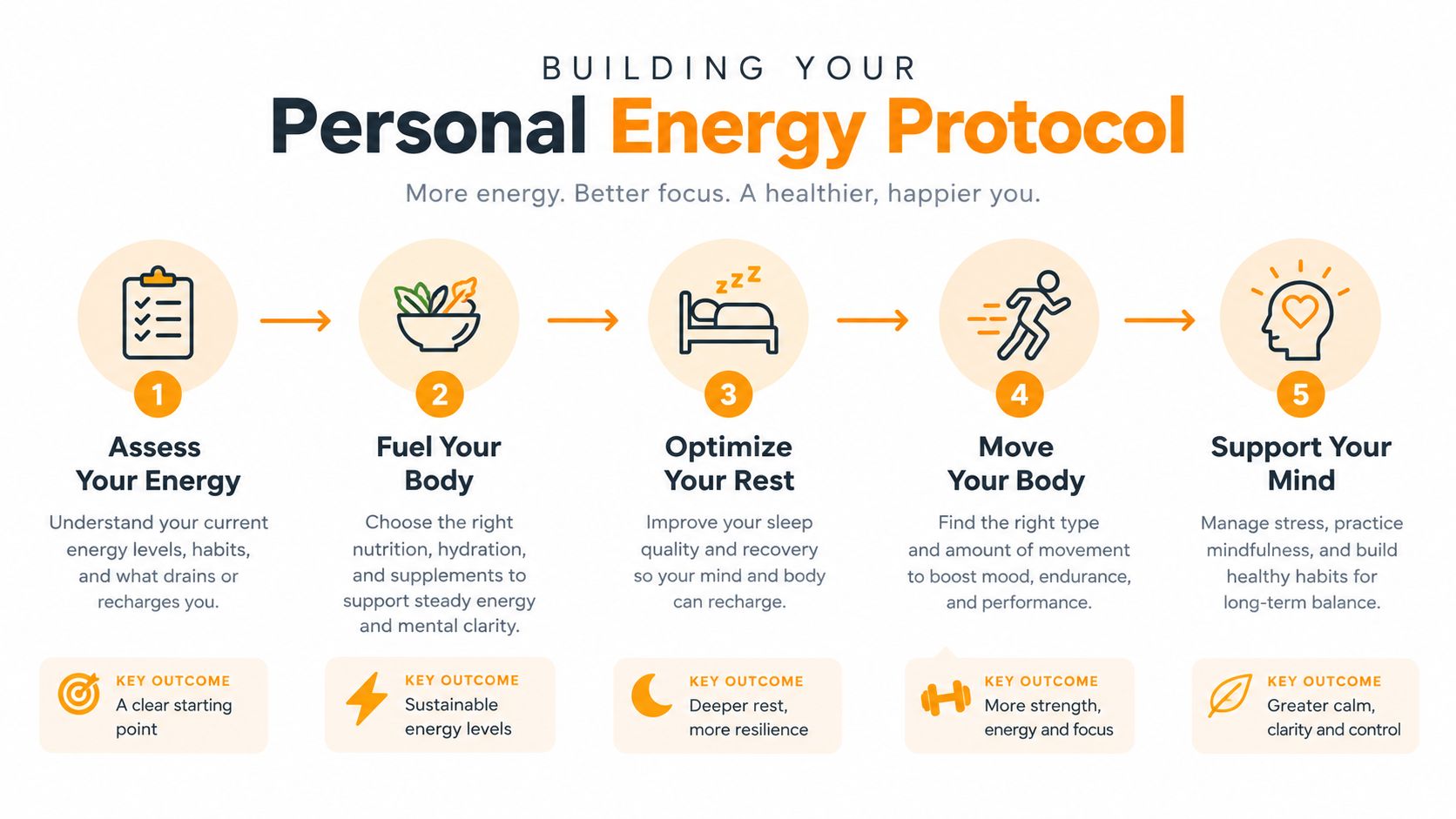
Morning activation
The morning block should create alertness with low-cost inputs before adding a stronger intervention.
- Use light and movement first. Outdoor light, a short walk, and mobility work can mark the start of the active period.
- Hydrate before escalating. Water and a proper breakfast address common causes of sluggishness.
- Define the first demanding task. Activation becomes more useful when it leads directly into meaningful work rather than passive scrolling.
- Choose stimulation only when the schedule calls for it. If a product includes caffeine or theacrine, the user should account for its timing and total exposure.
The point isn't to eliminate every stimulating input. It's to prevent the first input of the day from carrying the entire burden of sleep, nutrition, mood, and focus.
Midday focus
Midday performance often fails because workers treat every slump as the same. A person who feels hungry needs food. A person who feels mentally scattered needs fewer interruptions. A person who is physically exhausted after a demanding shift may need rest or a change in task intensity.
A useful midday protocol can look like this:
- Refuel deliberately: Use a meal or snack containing protein and carbohydrate instead of relying on a sweet beverage.
- Move before the hardest block: Take a brisk walk or complete a short mobility sequence before returning to focused work.
- Reduce task switching: Put communication into a defined window and protect the next work block.
- Use a compound only for its intended role: Select a fatigue modulator or focus-support ingredient when the foundation is already in place.
The market is moving toward more complete energy solutions. A Healthline overview of natural energy drinks cites a 2026 industry report stating that nearly half of consumers aged 25 to 34 associate caffeine with anxiety and crashes. That projection of consumer demand helps explain the interest in strategies that address both stimulation and recovery, but it doesn't prove that every caffeine-free product improves performance.
Evening recovery
The evening block is where many energy protocols fail. A worker uses a stimulant too late, pushes through the final hours, and then expects sleep to repair the resulting strain. Recovery requires an intentional off-ramp.
Lower light, a predictable meal, reduced work intensity, and a repeatable pre-sleep routine can signal that performance demands are ending. Relaxation support may be appropriate for some people, but a product marketed for evening use still deserves ingredient and timing scrutiny, especially if it contains melatonin or other active compounds.
Sequence beats intensity: Early-day activation, midday focus, and evening recovery should not rely on the same tool.
This staged model also gives professionals a way to test changes. Keep the foundation stable, alter one variable, and track practical outcomes such as task completion, perceived fatigue, sleep quality, and next-day readiness. A supplement that produces a noticeable sensation but worsens sleep may be a poor trade even if it feels effective for an hour.
Why Modern Delivery Formats Matter
The ingredient is only part of the experience. Delivery format affects timing, portability, adherence, and how easily a professional can use a product during real work.
Capsules are familiar and easy to store, but they depend on swallowing and gastrointestinal processing. They may suit a planned routine, though they can be inconvenient during a shift, on the road, or between operational tasks. Capsules also make it harder to preserve a simple ritual for people who dislike carrying bottles or taking pills.
Drinks are accessible and can replace the social and sensory role of coffee. Their weaknesses include transport, temperature, ingredient transparency, and the possibility of sugar or unnecessary additives. A caffeine-free drink may preserve the ritual while offering little direct support for alertness, so the label and intended mechanism still matter.
Buccal pouches for portable routines
Buccal or oral pouches place the product in the mouth rather than requiring a full drink or capsule routine. This format can be discreet, portable, and easier to time around meetings, calls, fieldwork, or long shifts. It also gives manufacturers a way to build distinct morning, daytime, and evening formulations rather than asking one product to cover every phase.
The format isn't automatically superior. Users still need to verify the active ingredients, serving instructions, stimulant content, and suitability for their health situation. The practical advantage is strongest when adherence is the main obstacle and the person needs a compact routine that fits unpredictable work.
For a clearer comparison of absorption routes, this explanation of sublingual and oral delivery helps distinguish convenience from claims about onset. Delivery should support the protocol, not distract from the fundamentals of sleep, food, movement, and timing.
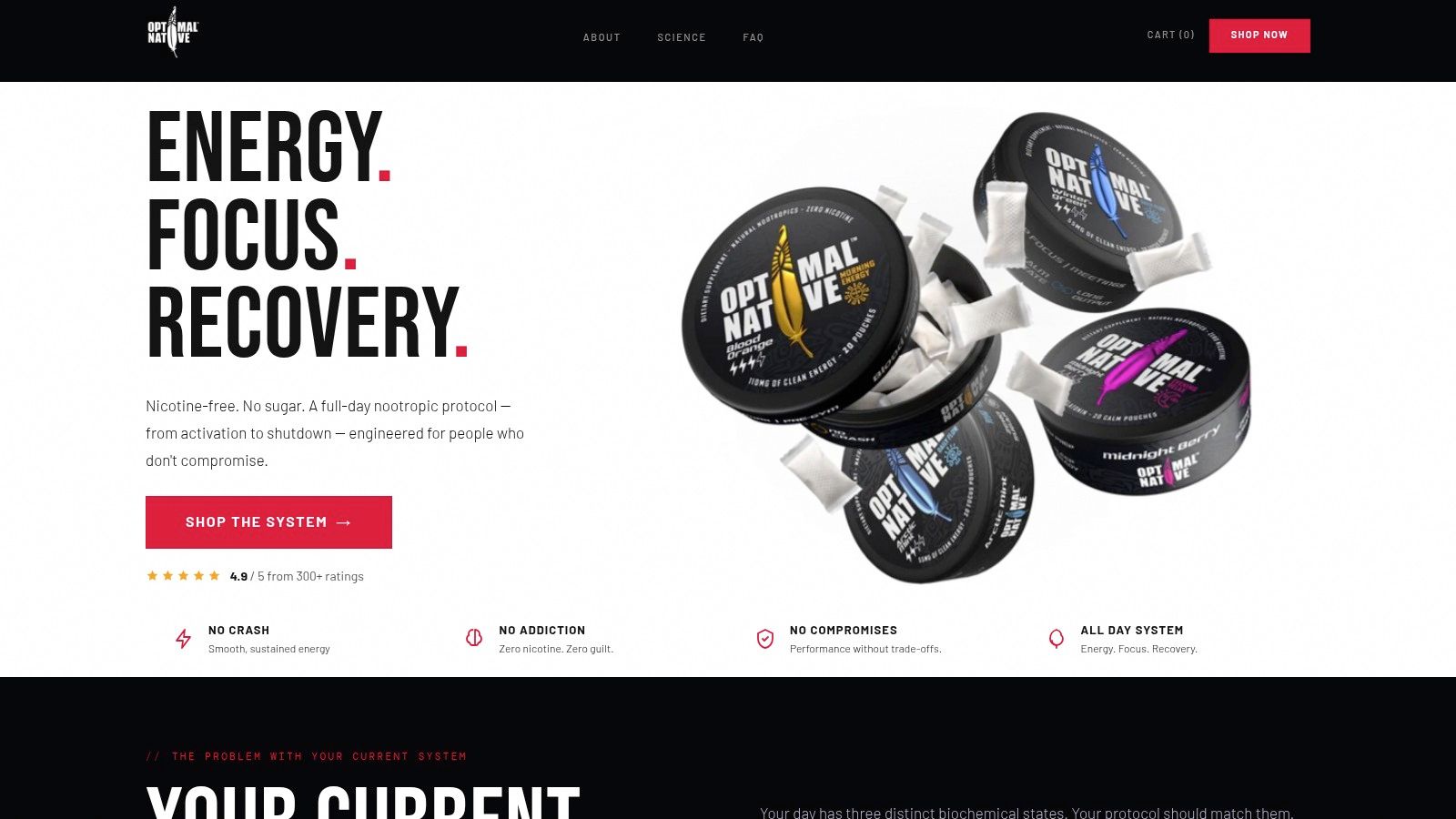
Optimal Native offers nicotine-free nootropic pouches organized around morning activation, daytime focus, and evening recovery. The system uses oral pouch delivery and distinct formulations, so it represents one option for professionals who prefer a portable, time-anchored approach rather than drinks or capsules.
For a structured alternative to caffeine for energy, explore the nicotine-free Morning Energy, Day Flow, and Evening Relax formats from Optimal Native. Choose the stage that matches the current work block, review the ingredients and timing, and build the routine around sleep, nutrition, movement, and recovery rather than another single stimulant.