

Spearmint Tea Bags: Flavor, Brewing, and Use Guide
Someone reaches for spearmint tea bags in the early evening expecting a clean, refreshing cup, then ends up with something flat, grassy, or oddly sharp. The problem may not be the herb alone. Water temperature, steeping time, leaf cut, bag material, and even the size of the mug can change what reaches the cup.
Spearmint tea is also surrounded by health claims that often blur small clinical trials with everyday wellness advice. This guide separates the sensory experience from the evidence, showing how spearmint differs from peppermint, how a paper or mesh bag affects extraction, how clinical amounts translate to retail tea bags, and where caution makes sense. It also covers comparisons with mint blends and nicotine-free oral pouches, food pairings, iced preparation, and common questions about storage and use.
Table of Contents
- Starting With a Better Cup of Spearmint
- What Spearmint Tea Bags Actually Contain
- Brewing Spearmint Tea Bags the Right Way
- Health Associations and What the Studies Show
- Spearmint Tea Bags vs Peppermint and Pouch Formats
- Food Pairings and Everyday Uses
- Safety, Tolerability, and Common Misconceptions
- FAQ and Final Takeaways
Starting With a Better Cup of Spearmint
You open a spearmint tea bag expecting a sweet, fresh drink, but the cup tastes thin or oddly sharp. The herb may be fine. A large mug, tightly packed bag, or overlong steep can change how much aroma and flavor reach the water.
Spearmint is usually softer and sweeter than peppermint, with a fresh mint character that is less intensely cooling. Volatile oils shape its aroma, while plant compounds include rosmarinic acid and flavonoids or flavanones, as described in Cleveland Clinic's overview of spearmint tea composition. The result is a bright cup that generally leaves a gentler impression than peppermint.
Four details shape the cup
The bag is part of the brewing system, much like a small filter around the leaf.
- Leaf and cut: Small pieces infuse quickly. Very fine particles may create a dusty texture or a harsher finish.
- Bag construction: A compact paper sachet can limit water movement, while a roomier mesh bag lets the leaf spread and water circulate.
- Water and time: Spearmint's aromatic oils are delicate. Excessive heat or a long steep may reduce its sweetness and bring out bitterness.
- Mug volume: One bag in a large mug produces a weaker drink, even with sound brewing.
A weak cup usually needs a smaller mug, more time, or a second bag. Boiling water is not automatically the answer.
Bag count also matters when comparing a kitchen cup with clinical research. A study may describe 5 g per day, divided into two cups, while a retail tea bag contains its own measured amount. Two bags do not automatically equal that dose. The label's weight and the bag's fill determine the comparison.
A simple tasting roadmap
Smell the steam first. Then notice the opening sweetness, the cooling freshness, and the finish. A clean finish suggests a balanced infusion; dryness can point to too much time or fine leaf. Lemon, ginger, or honey can suit spearmint, but strong additions may conceal weaknesses in the tea itself.
What Spearmint Tea Bags Actually Contain
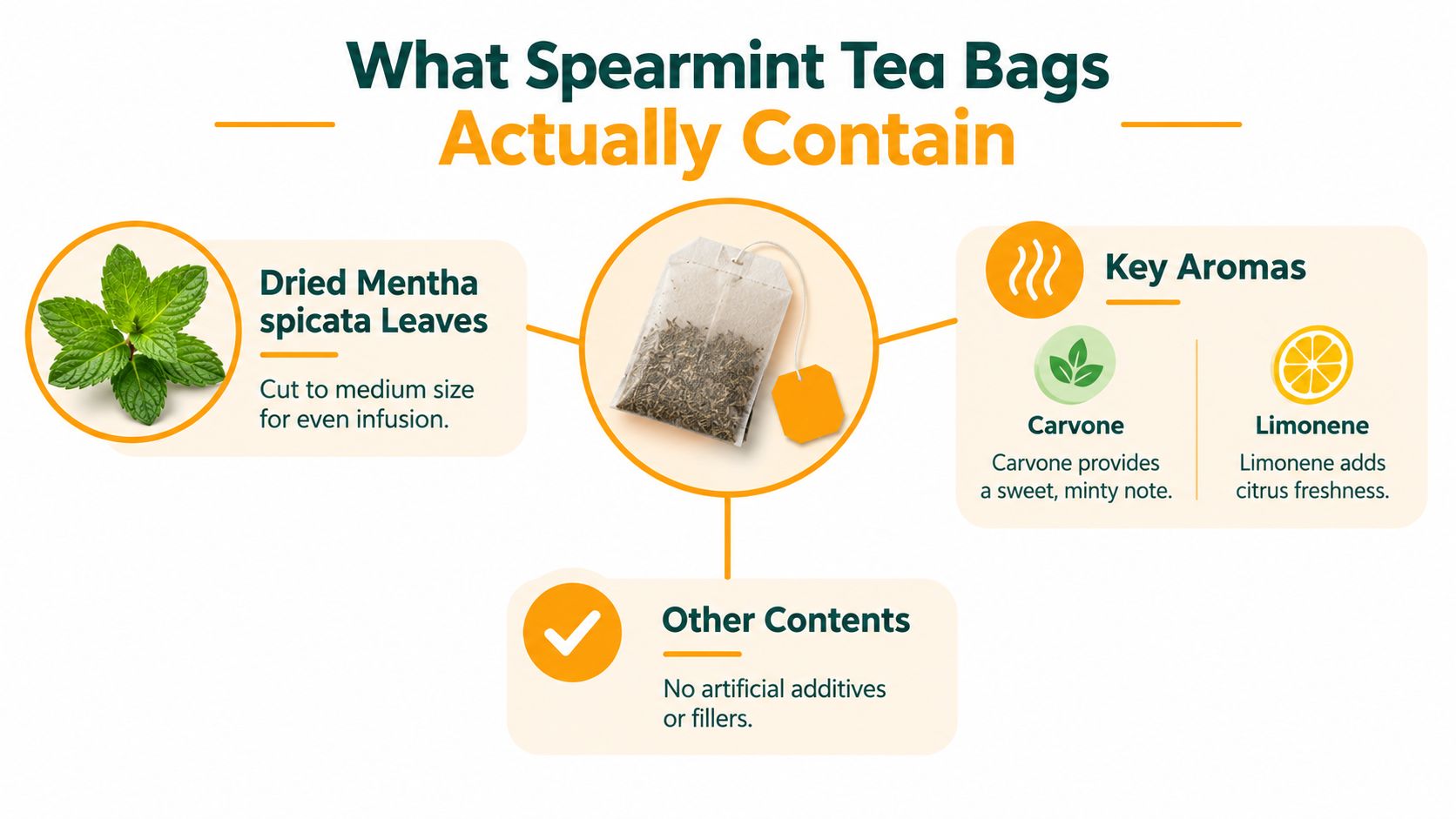
You open a packet expecting fresh mint, but a typical single-herb bag contains dried Mentha spicata leaves. The leaves are cut into pieces small enough for the sachet and for hot water to reach their surface. Drying removes moisture and changes the aroma, turning the plant into a shelf-stable ingredient rather than fresh mint compressed into a packet.
Carvone gives spearmint its sweet, rounded mint character. Peppermint generally has a stronger menthol effect, so the two herbs can feel quite different despite sharing a mint family. Spearmint also contains rosmarinic acid and flavonoids or flavanones. Volatile-oil constituents, including carvone and smaller amounts of menthol, contribute much of the recognizable aroma and taste. These compounds help explain the cup's sensory profile, but they do not by themselves prove a particular health outcome.
Why the bag changes extraction
The sachet works like a small filter around the leaf. A tightly packed paper bag can slow water movement, while a mesh pyramid usually gives the pieces more room to expand. That difference affects how quickly aroma and flavor enter the water. Neither format guarantees a better cup.
The ingredients can change even more when spearmint is part of a blend. Green tea, lemon balm, lemon flavor, and other botanicals alter the taste and composition. A green-tea base may also add caffeine, so a product labeled as spearmint is easier to assess if you want an herbal, caffeine-free infusion.
Bag material is only one part of the result. Leaf quality, storage, porosity, and brew strength influence how much of the volatile oils and other compounds reach the cup. This also explains why a clinical serving described as 5 g per day, divided into two cups cannot automatically be matched by two retail bags. Check each bag's stated weight before making that comparison.
Brewing Spearmint Tea Bags the Right Way
Spearmint responds well to water that's hot but not aggressively boiling. A practical starting point is 80 to 85 degrees Celsius, followed by 5 to 7 minutes of steeping in about 200 to 250 milliliters of water. Covering the mug helps retain volatile aroma compounds in the cup instead of allowing them to escape with the steam.
A useful starting setting
| Bag Format | Water Temp | Steep Time | Cup Size |
|---|---|---|---|
| Paper sachet | 80 to 85°C | 6 to 7 minutes | 200 to 250 ml |
| Mesh pyramid | 80 to 85°C | About 5 minutes | 200 to 250 ml |
A paper sachet may need the longer end of the window because the leaves have less space to move. A mesh pyramid can release flavor more readily, especially when the leaf pieces are larger and the water circulates freely. The bag shouldn't be left floating untouched in a large vessel, because a gentle stir halfway through the steep can improve contact between water and leaf.
Fixing common brewing problems
A weak cup may have too much water, too little time, or a tightly packed bag. A sharp or bitter cup may have been steeped too long, brewed too hot, or squeezed forcefully at the end. A soapy impression can come from an unusual product blend, stale aroma, or excessive concentration, and it shouldn't be corrected by adding more sweetener.
For iced tea, the same principle applies in a more concentrated form. A batch can be brewed stronger, cooled, and diluted over ice, or the bags can be steeped in cold water in the refrigerator for a slow infusion. Cold extraction usually gives a softer, less forceful profile, while hot brewing followed by chilling produces more immediate aroma.
Health Associations and What the Studies Show
The most relevant human evidence for tea bags concerns women with polycystic ovary syndrome and hirsutism. In a UK randomized controlled trial, 42 women received two cups of spearmint tea per day for 30 days; 41 completed the study. The spearmint group had significantly lower free and total testosterone than the placebo group and also reported improved hirsutism-related quality of life, as summarized in the PCOS Brief's account of the trial.
That result is useful because the trial used standardized tea bags and a defined daily amount. It connects the research more directly to packaged tea than studies based only on capsules, concentrated extracts, or essential oils. It still doesn't establish spearmint tea as a treatment for PCOS, and a small trial can't answer every question about long-term use or different populations.
Translating studied amounts to a kitchen cupboard
A Cleveland Clinic summary notes that many spearmint studies used 5 grams of tea per day, which it equates to about 3 to 4 standard tea bags. The same summary describes a human memory study using 900 milligrams of spearmint extract daily, with a reported 15% improvement in working memory, but an extract dose shouldn't be treated as interchangeable with brewed tea, as explained in this quantified review of spearmint research.
| Use case | Studied amount | Tea bag equivalent |
|---|---|---|
| PCOS and hirsutism trial | Two cups daily for 30 days | Standardized tea bags, with the trial's exact bag weight not specified in the verified summary |
| Broader spearmint tea research | 5 g of tea per day | About 3 to 4 standard tea bags |
| Memory research | 900 mg of spearmint extract daily | Not directly equivalent to brewed tea bags |
A single retail bag may contain less herb than the amounts used in some studies. The label is therefore important, and a reader shouldn't assume that one mild mug reproduces a clinical protocol. Evidence for digestion, antioxidant activity, memory, blood pressure, and blood sugar remains preliminary or context-dependent rather than a settled clinical recommendation.
For readers interested in non-caffeinated routines alongside careful health habits, this guide to calm focus without caffeine offers a broader lifestyle perspective. It shouldn't be read as evidence that spearmint tea treats a medical condition.
Spearmint Tea Bags vs Peppermint and Pouch Formats
Spearmint and peppermint belong to the same broad mint family, but they create different experiences. Spearmint tends to taste sweet, mild, and rounded, with carvone playing an important role in its aroma. Peppermint feels sharper and cooler because menthol is more prominent. Someone seeking a gentle evening drink may prefer spearmint, while someone wanting a more forceful breath-freshening sensation may choose peppermint.
Both pure spearmint and pure peppermint infusions are naturally caffeine-free. A mint blend made with green tea is different, because the tea base contributes caffeine. Nicotine-free oral pouches are a separate category again. They may use mint flavoring, but they aren't tea, don't require water, and aren't designed to be steeped or consumed as an herbal infusion.
| Format | Flavor profile | Caffeine | Preparation | Typical use |
|---|---|---|---|---|
| Spearmint tea bag | Sweet, soft, fresh | Naturally caffeine-free when pure | Steep in hot or cold water | Evening drink, food pairing, post-meal ritual |
| Peppermint tea bag | Strong, cool, intense | Naturally caffeine-free when pure | Steep in hot or cold water | Bold mint flavor and breath freshness |
| Mint and green tea blend | Minty with vegetal tea notes | Contains caffeine from green tea | Steep according to the blend | Morning or daytime drink |
| Nicotine-free mint pouch | Flavor-led, no brewed tea character | Depends on the formulation | Place in the mouth, don't steep | Portable oral ritual or pouch replacement |
The Aroma Warehouse mint oil guide provides useful background on the sensory distinction between spearmint and peppermint oils, though oil comparisons shouldn't be treated as dosing guidance for tea.
Readers comparing oral formats with brewed beverages can also review this explanation of non-tobacco pouches. The central choice is practical: tea offers hydration, aroma, warmth, and a deliberate pause, while a pouch offers portability without the brewing ritual.
Food Pairings and Everyday Uses
Spearmint works best with foods that leave room for its sweetness. Its lighter profile can lift a dish without overpowering delicate flavors, especially when the tea is brewed moderately rather than concentrated into a harsh, medicinal cup.
Pairing by flavor family
- Light desserts: Lemon cake, shortbread, and vanilla custards echo spearmint's soft sweetness. The citrus or vanilla gives the tea a clear contrast.
- Fresh fruit: Strawberries, melon, and citrus segments make natural partners because their acidity and juiciness keep the pairing lively.
- Savory foods: Grilled lamb, chickpea salads, and yogurt-based dips work well with mint's fresh character. A warm cup can also balance richer or spiced meals.
- Simple snacks: Plain biscuits, lightly salted nuts, and mild sandwiches won't compete with the tea's aroma.

Making a refreshing iced version
Cold-brewed spearmint is gentle and convenient. Use six to eight tea bags in a container of cold water, leave it in the refrigerator for six to eight hours, then remove the bags and serve over ice. The result tends to taste smoother than a heavily boiled batch.
Hot-brewed tea can also be chilled, but it should be made stronger before dilution. Lemon slices, a mint leaf garnish, a thin piece of fresh ginger, a splash of lime, or a small spoon of honey can add definition. Each addition changes the balance, so strong ginger or a large amount of citrus may cover the delicate carvone-led aroma.
A useful pairing test is simple. Take a sip of tea before the food, another during the bite, and a final sip afterward. The best match keeps both the dish and the mint recognizable.
Safety, Tolerability, and Common Misconceptions
Spearmint tea is generally well tolerated in moderate dietary amounts, but mint isn't comfortable for everyone. Mint oils may relax the lower esophageal sphincter, which can worsen reflux symptoms in sensitive people. MedlinePlus guidance on spearmint and related natural products highlights the importance of considering concentrated intake, existing conditions, and personal response.
People with GERD should pay attention to timing, strength, and symptoms rather than assuming that an herbal drink is automatically gentle. Pregnancy, kidney or liver conditions, and hormone-affecting medication also deserve professional guidance before someone begins drinking multiple strong cups daily. The anti-androgenic research used sustained tea intake, so pregnancy and hormone-sensitive situations shouldn't be treated as casual self-experimentation.
What the evidence doesn't prove
Several popular claims go beyond the available human data:
- PCOS treatment: Spearmint tea isn't a proven replacement for diagnosis, medication, or individualized PCOS care.
- Acne and hirsutism cure: A trial signal around androgen measures and quality of life doesn't guarantee visible results for every drinker.
- Sleep medicine: The tea is caffeine-free, but it isn't a melatonin-based sleep aid. The calming effect may come from warmth, routine, and personal preference.
- Metabolism booster: Spearmint shouldn't be expected to speed metabolism in the way social media often suggests.
- More is better: Stronger brewing and higher frequency can increase reflux or other unwanted effects without proving greater benefit.
Readers who experience reactions to small amounts of caffeine may find this explanation of caffeine sensitivity useful when checking whether a mint blend contains green or black tea. Pure spearmint itself is naturally caffeine-free, but product labels still matter.
A moderate approach is sensible. Start with a normal-strength cup, observe digestion and reflux symptoms, and avoid escalating intake to chase a health outcome that has only limited clinical support.
FAQ and Final Takeaways
Do spearmint tea bags expire?
They lose aroma and flavor over time. The practical issue is usually staleness rather than an immediate safety problem, provided the bags remain dry, clean, and free from signs of moisture or contamination. Airtight storage away from heat and strong odors helps protect the volatile oils.
Should the bag be squeezed?
Gentle pressure is fine when removing it. Vigorous squeezing can push more fine particles and tannin-like compounds into the cup, making the finish sharper or more bitter. A short drain over the mug is usually enough.
Does spearmint stain teeth?
It generally stains less than dark tea, but any strongly colored beverage can leave residue. Drinking water afterward or rinsing the mouth helps keep the routine simple.
How does bagged spearmint compare with fresh leaves?
Fresh leaves can smell brighter and more immediate, while tea bags offer consistent storage, portability, and quick preparation. Bagged tea may taste slightly less aromatic because drying and packaging reduce some of the fresh-leaf character.
Can children drink spearmint tea?
Pure spearmint tea is caffeine-free and may be suitable in moderation, but age, allergies, reflux, medications, and individual health conditions matter. Parents should ask a pediatric clinician when a child has a medical condition or is expected to drink it regularly.
The practical summary is straightforward. Brew spearmint tea bags with hot water below a full boil, give them enough time to open up, and use a modest mug rather than over-diluting the cup. Expect a sweet, mild mint that pairs easily with fruit, light desserts, salads, lamb, and yogurt-based foods. Health claims deserve measured skepticism, especially when a retail bag is being compared with a standardized clinical dose.
A thoughtful tea routine starts with the label, the bag format, and the drinker's response. That approach preserves what spearmint does well, a clean flavor and an easy ritual, without asking a small evidence base to promise more than it can support.
For readers who want a portable alternative to another coffee or a nicotine ritual, Optimal Native offers nicotine-free, sugar-free oral pouches designed for daytime energy, calm focus, and evening wind-down. Explore the timed three-stage protocol and find the format that fits demanding workdays, long shifts, or recovery routines at Optimal Native.