

Why Energy Drinks Harm Student Health: 2026 Facts
TL;DR:
- Energy drinks expose students to high levels of caffeine and stimulants that threaten cardiovascular health and sleep quality. Dependency on energy drinks impairs academic performance, increases stress, and damages long-term well-being. Safer alternatives focused on sleep, hydration, nutrition, and natural nootropics support sustained focus without health risks.
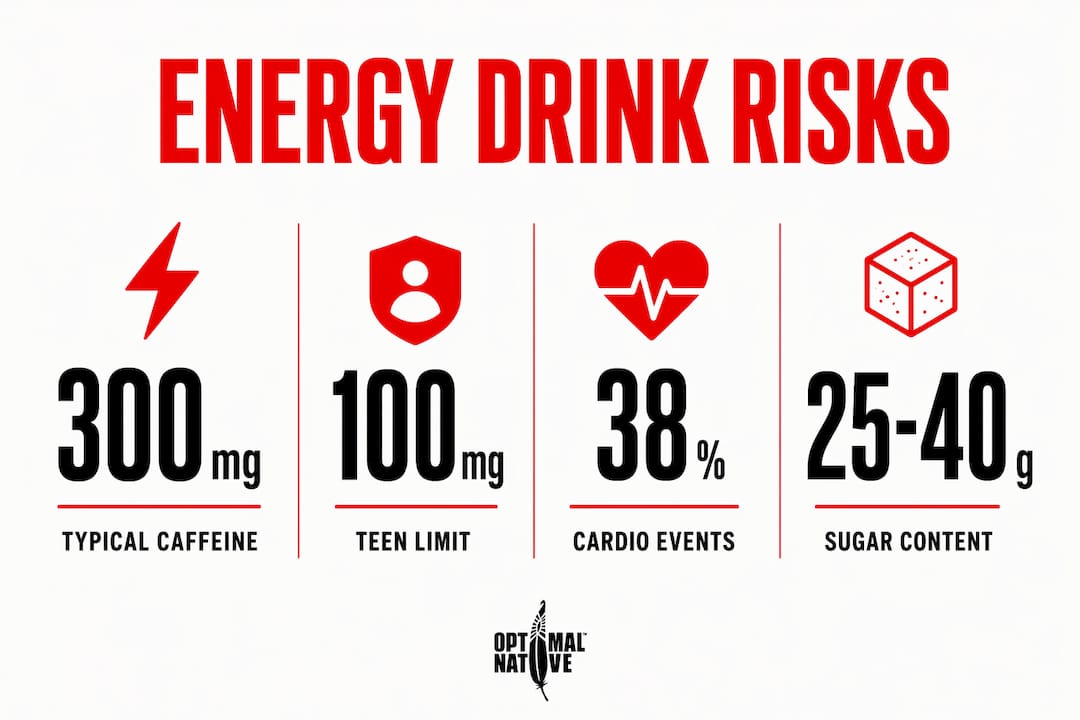
Energy drinks harm student health by flooding the body with stimulants that spike blood pressure, wreck sleep, and impair the cognitive function students need most. The American Academy of Pediatrics recommends zero energy drink consumption for anyone under 18, and the research behind that position is stark. Many popular drinks contain 200–300 mg of caffeine, two to three times the 100 mg daily limit set for teenagers. Dr. Mark Corkins and other pediatric nutrition experts have documented how developing brains and smaller bodies absorb stimulants faster, making the risks for students significantly higher than for adults.
Why energy drinks harm student health at the cellular level
The core problem is not just caffeine volume. It is the combination of caffeine, taurine, B vitamins, and herbal stimulants packed into a single can that overwhelms a student’s cardiovascular and nervous systems simultaneously.
Consumer Reports data confirms that teen caffeine limits are routinely exceeded by a single serving of popular energy drinks. That excess triggers a measurable physical response within 30 minutes of consumption.
The cardiovascular data is particularly alarming. Students who consume energy drinks show significant blood pressure spikes, with 53.8% experiencing elevated systolic pressure and 61.5% showing elevated diastolic pressure. Elevated diastolic pressure is the kind doctors watch closely because it signals the heart is working harder even at rest.
A systematic review of adverse energy drink events found that 38.46% involve the cardiovascular system, including ischemic events at 24.45% and arrhythmias at 22.23%. These are not minor inconveniences. Ischemic events and arrhythmias are the same categories of cardiac events that land adults in emergency rooms.
Pro Tip: Dr. Mark Corkins notes that caffeine acts more rapidly in younger bodies due to smaller size and still-developing brains, meaning a dose that feels manageable to an adult can push a teenager past the threshold for serious side effects like insomnia, anxiety, and heart palpitations.
| Energy Drink | Typical Caffeine (mg) | Teen Daily Limit (mg) | Cardiovascular Symptom Risk |
|---|---|---|---|
| Standard 16 oz can | 160 | 100 | Exceeds limit by 60% |
| Large 24 oz can | 240 | 100 | Exceeds limit by 140% |
| “Sugar-free” variant | 200 | 100 | Exceeds limit by 100% |
| Double-shot format | 300 | 100 | Exceeds limit by 200% |
How do energy drinks affect sleep and mental health in students?
Caffeine does not just keep you awake. It actively blocks adenosine receptors, the chemical signals your brain uses to register tiredness and initiate sleep. When those signals are suppressed, you feel alert even when your body is exhausted. The problem is that the exhaustion does not disappear. It accumulates.

Caffeine has a six-hour half-life, which means a drink consumed at 4 p.m. still has half its caffeine active in your system at 10 p.m. That residual stimulant degrades the restorative phases of sleep, specifically the deep sleep stages where memory consolidation and physical recovery happen. You may fall asleep, but the sleep you get is lower quality.
The cycle this creates is the real trap. Students drink an energy drink to push through fatigue, sleep poorly, wake up more tired, and reach for another energy drink. This dependency loop is not a character flaw. It is a predictable pharmacological response to repeated stimulant use. Understanding how caffeine disrupts sleep is the first step to breaking that pattern.
A public health meta-analysis found that short-term alertness gains from energy drinks are offset by higher stress, anxiety, and depressive symptoms that negatively affect long-term academic success. The mental health toll compounds over a semester.
Mental health symptoms linked to regular energy drink use include:
- Anxiety and restlessness from overstimulated adrenal response
- Increased depressive episodes following stimulant crashes
- Irritability and mood instability tied to blood sugar swings
- Difficulty concentrating once the stimulant effect fades
- Chronic sleep debt that worsens all of the above
Pro Tip: If you study after 2 p.m. and rely on an energy drink to focus, switch to a caffeine-free focus method before 12 p.m. to protect your sleep architecture without sacrificing productivity.
What is the impact on academic performance and study habits?
The paradox of energy drinks and academic performance is well documented. Students reach for them to study better, but the physiological outcome works against that goal.
The initial stimulant spike does produce a short window of heightened alertness. That window typically lasts 60–90 minutes before the crash begins. During the crash, reaction time slows, decision-making becomes impaired, and the ability to retain new information drops sharply. For a student in a three-hour exam or a long study session, that crash arrives at exactly the wrong moment.
The deeper problem is dependency. Sustained reliance on energy drinks creates a state where students cannot reach their normal baseline cognitive function without a stimulant. Their resting alertness level drops over time, making them feel foggy and slow without a drink. This is not a productivity tool. It is a performance debt that compounds with every can.
Research also links energy drink use to increased academic stress and reduced memory consolidation. Memory consolidation happens during deep sleep, the same sleep stage that caffeine suppresses. Students who drink energy drinks late in the day are directly undermining the brain’s ability to lock in what they studied.
| Perceived Benefit | Documented Reality |
|---|---|
| Improved focus during study | Short spike followed by cognitive crash within 90 minutes |
| Reduced need for sleep | Sleep debt accumulates, impairing memory consolidation |
| Better exam performance | Increased stress and anxiety reduce recall under pressure |
| More productive study hours | Dependency raises baseline stimulant need over time |
| Sustained energy through class | Afternoon crash impairs attention during lectures |
How do sugar and additives in energy drinks worsen the damage?
Caffeine is not the only threat in a standard energy drink. The sugar content in most mainstream cans runs between 25–40 grams per serving. That is roughly the equivalent of a full candy bar consumed alongside a stimulant. The sugar spike triggers a rapid insulin response, which produces a secondary energy crash on top of the caffeine crash.
The diuretic effect of caffeine combined with high sugar content accelerates dehydration and worsens physical fatigue despite the perceived alertness. Dehydration during intense mental work, like studying for finals, compounds cognitive fatigue faster than most students realize. This is also a documented concern in high-demand professions. The energy drinks dangers for first responders mirror the student experience because both groups use stimulants to push through exhaustion in high-stakes situations.
Sugar-free versions are not a clean solution either. Artificial sweeteners like sucralose and acesulfame potassium alter gut microbiome composition with repeated use, and some research links them to metabolic disruption over time.
Cumulative physical harms from energy drink additives include:
- Dehydration from caffeine’s diuretic effect, worsened by mental exertion
- Blood sugar crashes from high-glycemic sugar content
- Metabolic disruption from artificial sweeteners in sugar-free variants
- Dental erosion from high acidity levels in most formulas
- Gut health impact from repeated artificial sweetener consumption
Pro Tip: Replace your afternoon energy drink with 16 oz of water plus a small handful of mixed nuts and a piece of fruit. This combination stabilizes blood sugar, supports hydration, and provides a steady energy release without the stimulant spike.
What are safer alternatives for students who need focus?
The goal is not to eliminate energy. The goal is to get it from sources that do not carry cardiovascular, sleep, and mental health risks. Students have more effective options than they typically realize.
Ranked by effectiveness and safety, here are the top alternatives:
- Sleep prioritization. Seven to nine hours of quality sleep produces more cognitive output than any stimulant. No supplement replaces this.
- Strategic hydration. Even mild dehydration reduces concentration and working memory. Drinking water consistently throughout the day is a free performance tool.
- Low-glycemic nutrition timing. Eating protein and complex carbohydrates before study sessions stabilizes blood sugar and sustains focus for two to three hours without a crash.
- Green tea. Contains roughly 30–50 mg of caffeine alongside L-theanine, which moderates the stimulant effect and reduces anxiety. The combination produces calm alertness without the spike-and-crash cycle.
- Nootropic and adaptogen blends. Products built around ingredients like ashwagandha, lion’s mane, and rhodiola rosea support focus and stress resilience without caffeine dependency. You can explore jitter-free study energy options that fit this profile.
- Movement breaks. A 10-minute walk increases cerebral blood flow and restores attention span more effectively than a second energy drink.
The pattern across all of these alternatives is the same. They work with your body’s natural energy systems rather than overriding them with stimulants.
Key takeaways
Energy drinks harm student health by combining excessive caffeine, high sugar, and stimulant additives that damage cardiovascular function, destroy sleep quality, and create dependency cycles that reduce academic performance over time.
| Point | Details |
|---|---|
| Caffeine overload is the core risk | Most energy drinks contain 200–300 mg of caffeine, two to three times the teen daily limit of 100 mg. |
| Cardiovascular damage is measurable | Over half of student consumers show elevated blood pressure, and 38.46% of adverse events involve the heart. |
| Sleep destruction compounds the harm | Caffeine’s six-hour half-life degrades deep sleep, impairing memory consolidation critical for learning. |
| Academic performance suffers long-term | Dependency raises baseline stimulant need, and crashes impair cognition during exams and study sessions. |
| Safer alternatives exist and work | Sleep, hydration, green tea, and nootropic blends deliver sustained focus without the health trade-offs. |
The uncomfortable truth about energy drinks and student culture
Students are not reaching for energy drinks because they are uninformed. They are reaching for them because the pressure is real, the deadlines are real, and the drinks are everywhere. I understand that. But the trade-off is worse than most students calculate in the moment.
Here is what I have seen repeatedly: students use energy drinks as a substitute for the one thing that would actually solve the problem, which is sleep. The drink masks the exhaustion well enough to get through one more hour of studying, but it degrades the sleep that would have locked in everything studied that day. You end up studying more and retaining less.
The cardiovascular data is not abstract. A 19-year-old with no prior heart history experiencing an arrhythmia after two energy drinks is not a rare edge case. It is a documented pattern in the systematic review literature. Students who would never consider a recreational stimulant drug are consuming the equivalent in a brightly labeled can without a second thought.
The long-term cost is not worth the short-term edge. Sustainable academic performance comes from recovery, not from overriding your body’s signals with stimulants. The students who consistently perform at the highest level are not the ones who drink the most energy drinks. They are the ones who protect their sleep and manage their energy systems deliberately.
— Optimal Native
Clean energy built for students, not against them
Students deserve a focus solution that does not come with cardiovascular risk, sleep destruction, or a dependency cycle attached.
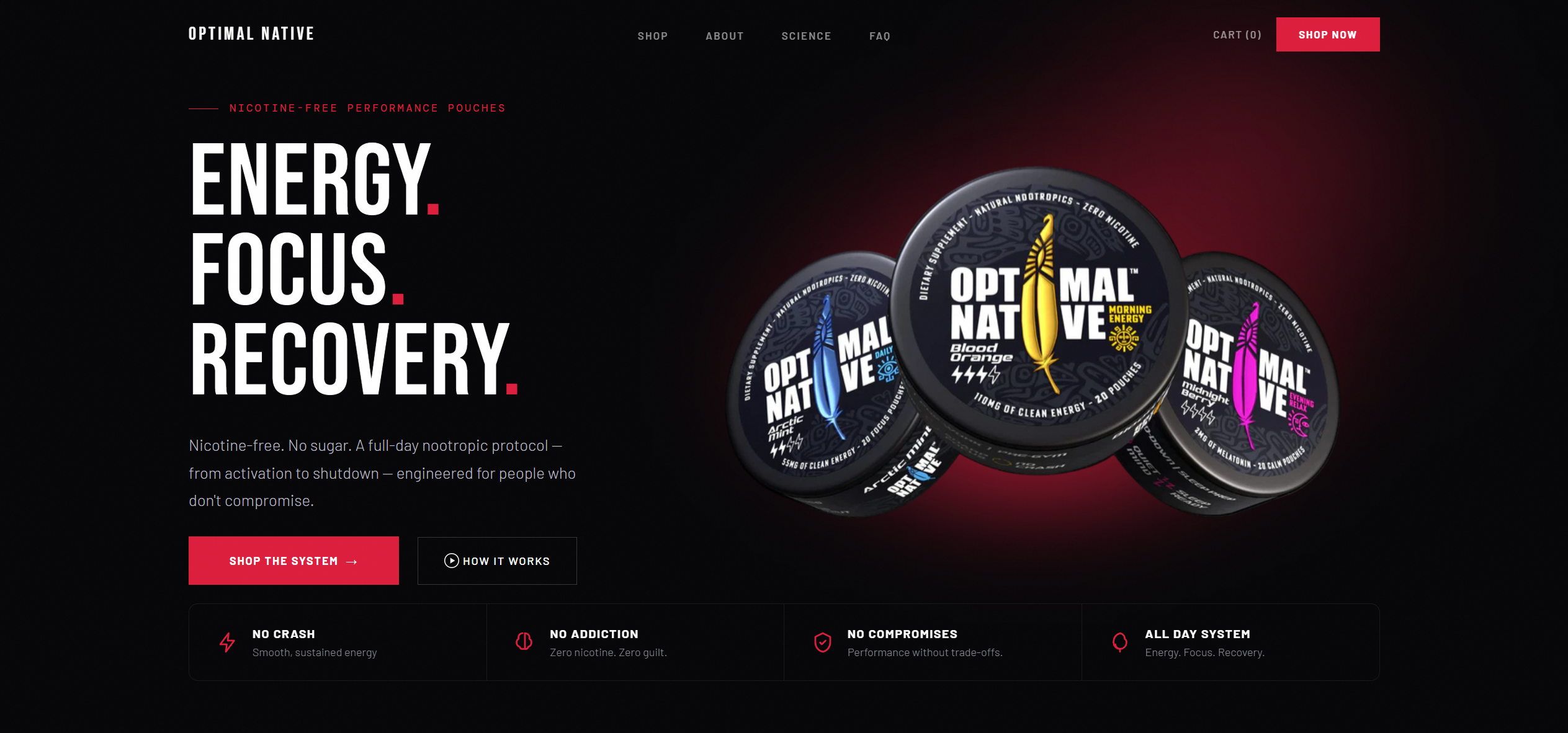
Optimal Native was built for exactly this situation. The nicotine-free performance pouch system delivers a blend of nootropics and adaptogens that support clean, sustained energy aligned with your body’s natural states. No caffeine spikes. No crashes. No jitters. Over 300 verified reviews average 4.9 out of 5 stars, with users consistently reporting improved focus and energy that lasts through long study sessions. If you are ready to stop borrowing energy from tomorrow, explore the Subscribe and Save plan for steady access with real savings. Your grades and your health will both thank you.
FAQ
How much caffeine is too much for a student?
The American Academy of Pediatrics sets the daily caffeine limit for teenagers at 100 mg. Most energy drinks contain 200–300 mg per can, meaning a single serving exceeds the recommended limit by up to 200%.
Can energy drinks cause heart problems in students?
Yes. Research shows that 38.46% of adverse energy drink events involve the cardiovascular system, including arrhythmias and ischemic events, even in otherwise healthy young people.
Do energy drinks actually improve studying?
No. The short-term alertness spike lasts roughly 60–90 minutes before a cognitive crash sets in. Long-term use creates a dependency that lowers baseline cognitive function without stimulant intake.
Are sugar-free energy drinks safer for students?
Not significantly. Sugar-free versions still contain high caffeine levels that exceed teen limits, and artificial sweeteners like sucralose carry their own metabolic risks with repeated use.
What is the best natural alternative to energy drinks for focus?
Green tea provides 30–50 mg of caffeine alongside L-theanine for calm alertness without a crash. Combined with adequate sleep and hydration, it is the most evidence-supported low-risk focus tool available to students.